How many shower stations does an Oregon camp or crew actually need?
A shower line behaves differently from a restroom line. People spend ten to fifteen minutes inside, nearly everyone wants to go at the same time and nobody enjoys waiting in the cold. Head count alone gives the wrong answer. The number to plan around is how many people want to wash in the same window and how long that window runs.
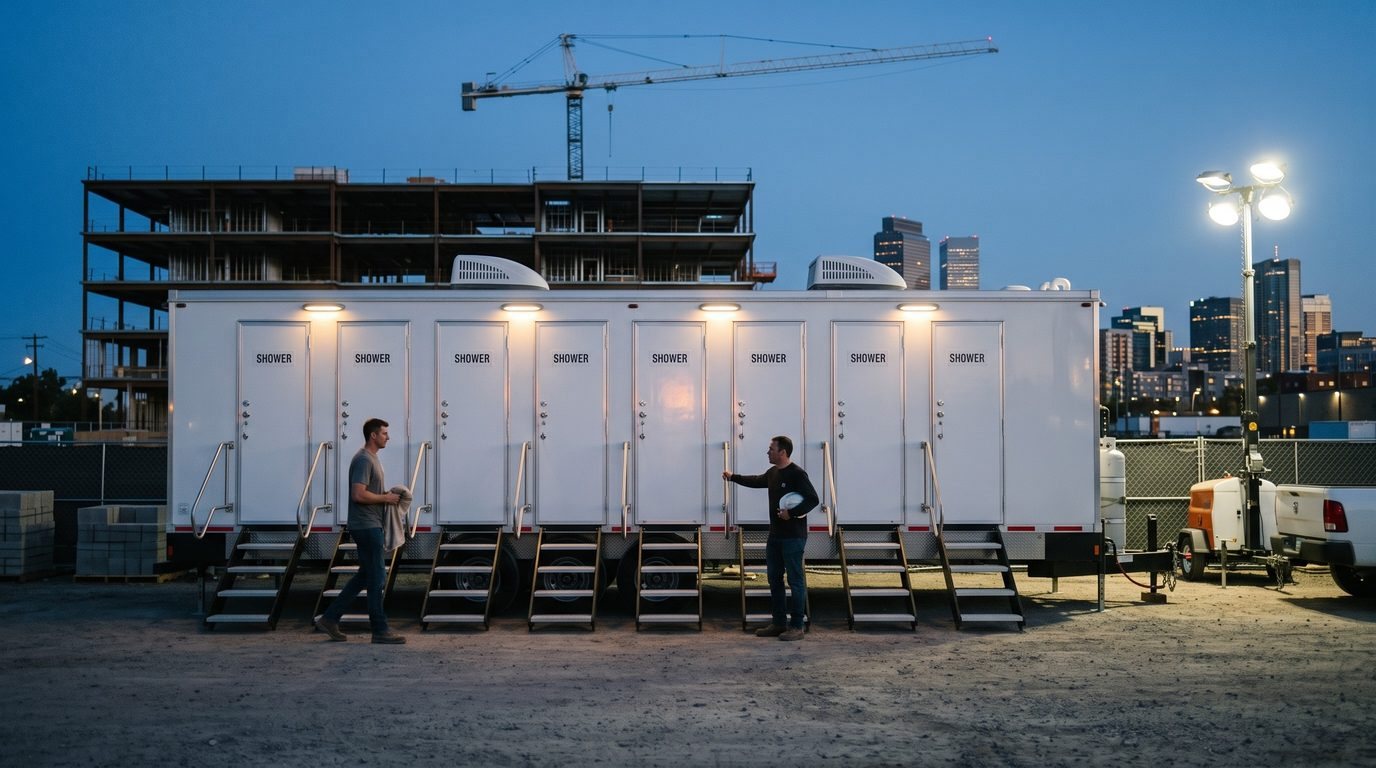
Start with the shift pattern. A crew of 60 that finishes at four in the afternoon wants showers in one rush. A film crew that wraps at midnight wants them again before the morning call. A youth camp spreads showers over the whole evening but hits a peak right after the last activity. Write down the window, then count the people inside it.
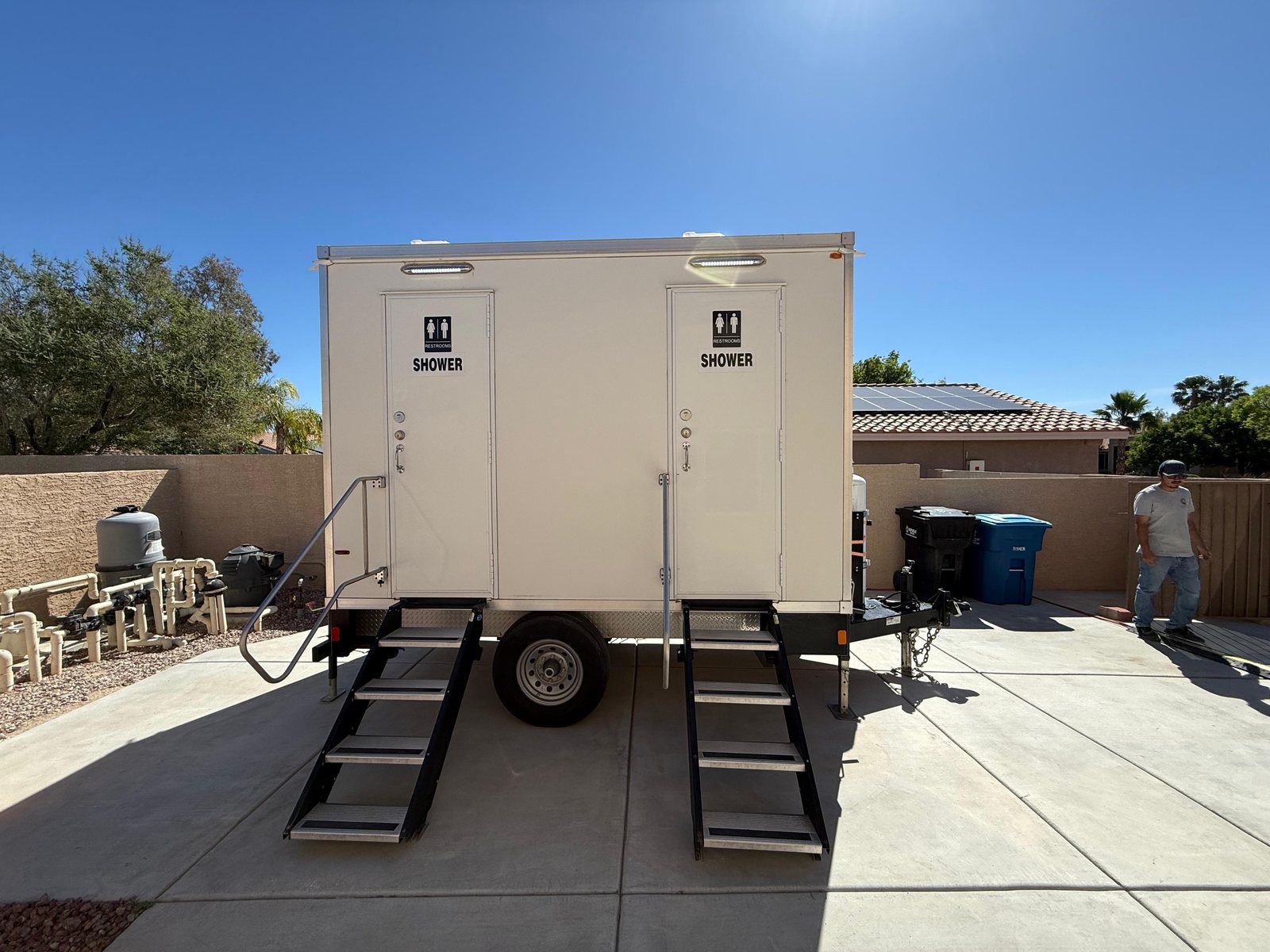
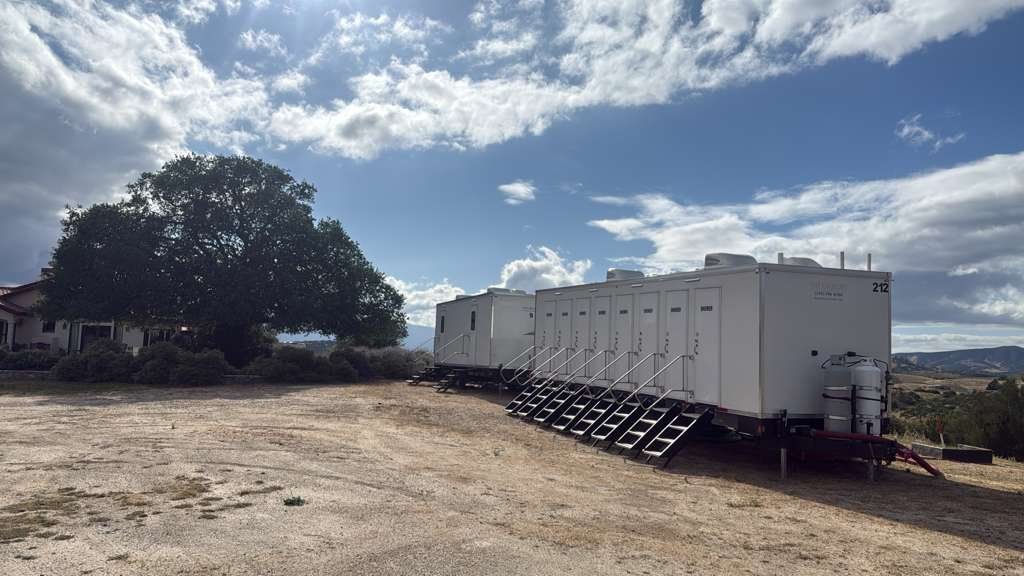
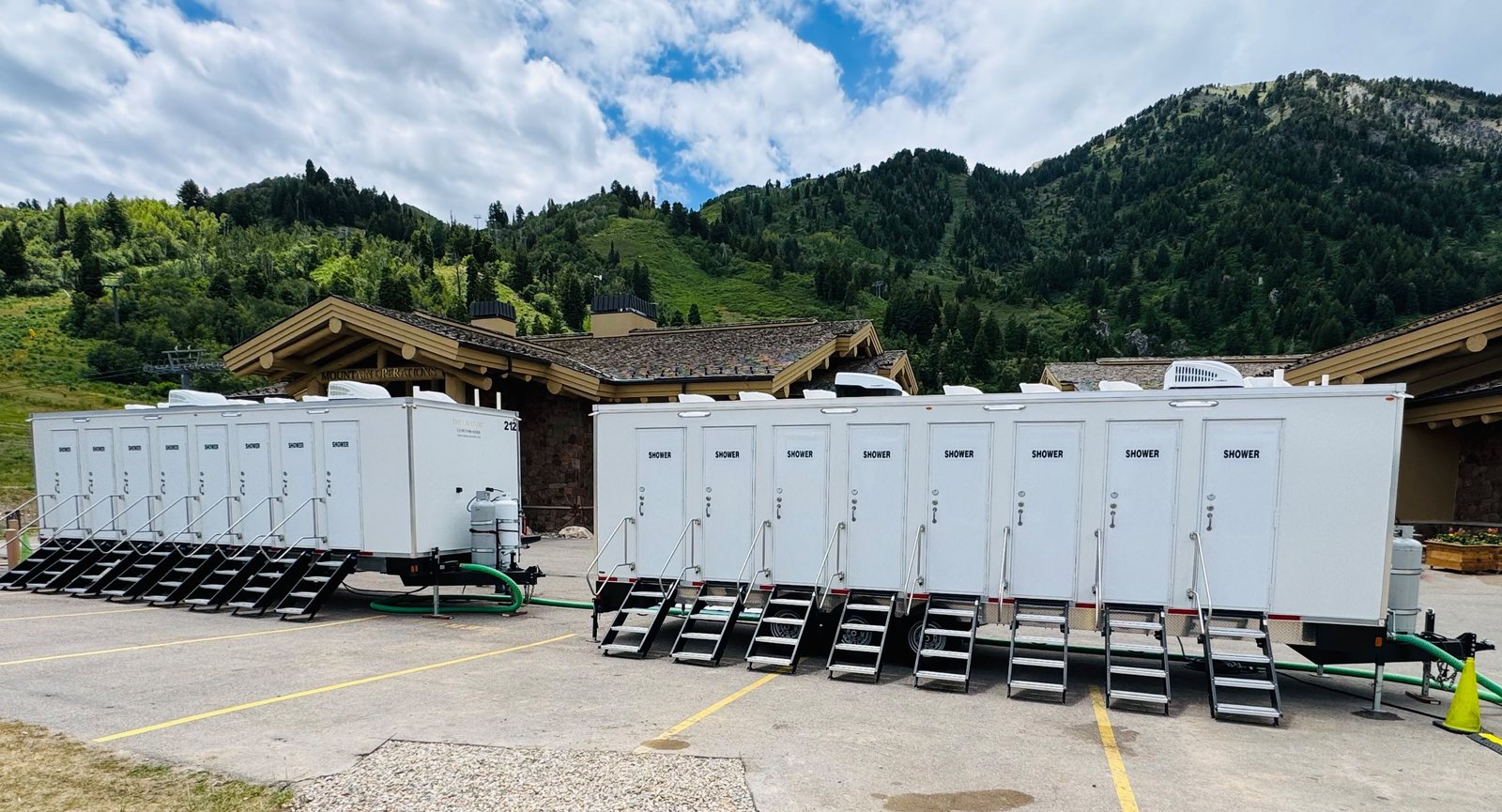
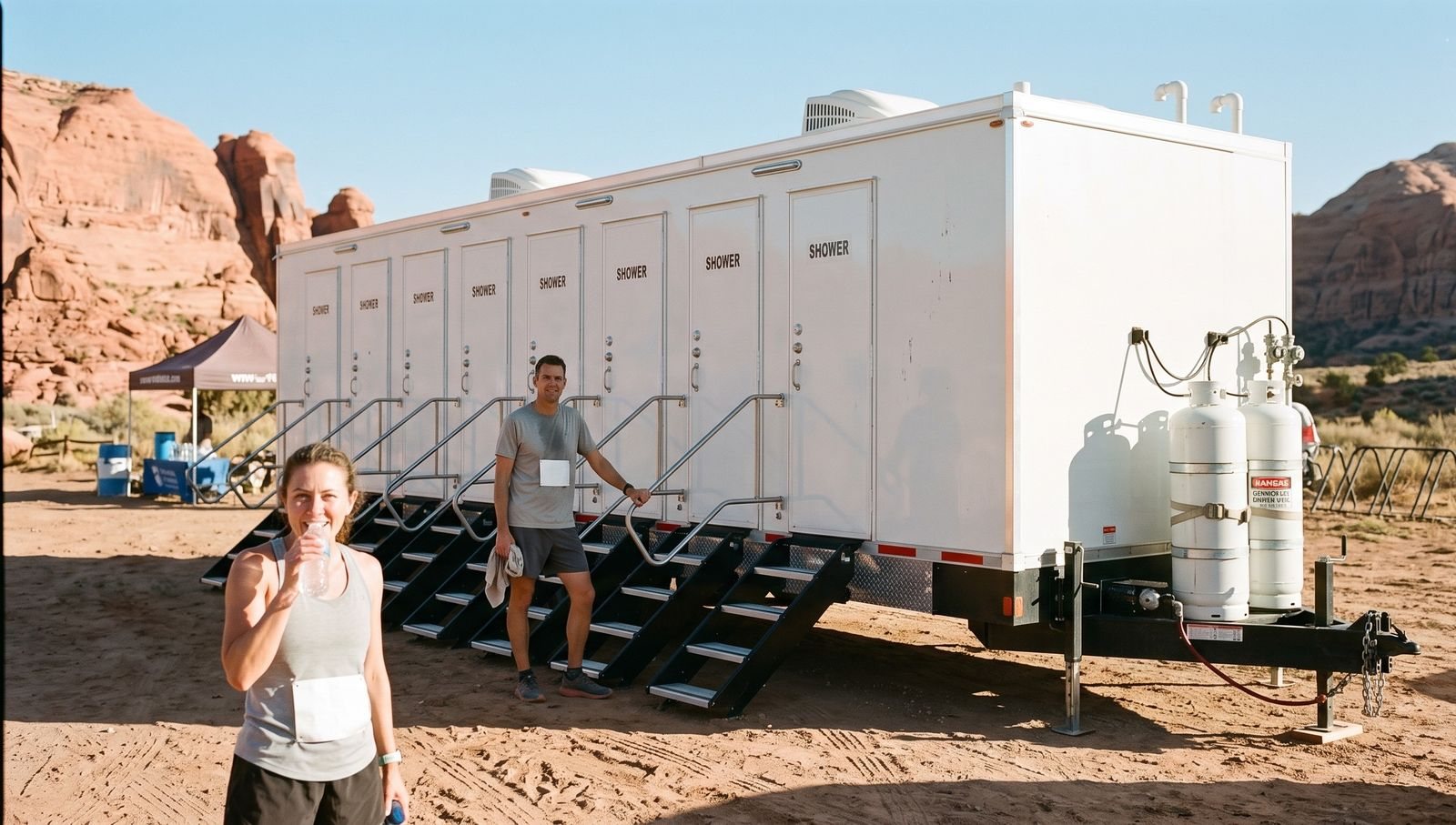
Next, set the stations against the peak. A multi-station trailer lets several people wash at once, and each person takes about the same time. A peak of 40 people in a 90-minute window needs more stations than a peak of 40 spread over four hours. Dispatch can do the math with you in a few minutes if you share the schedule.
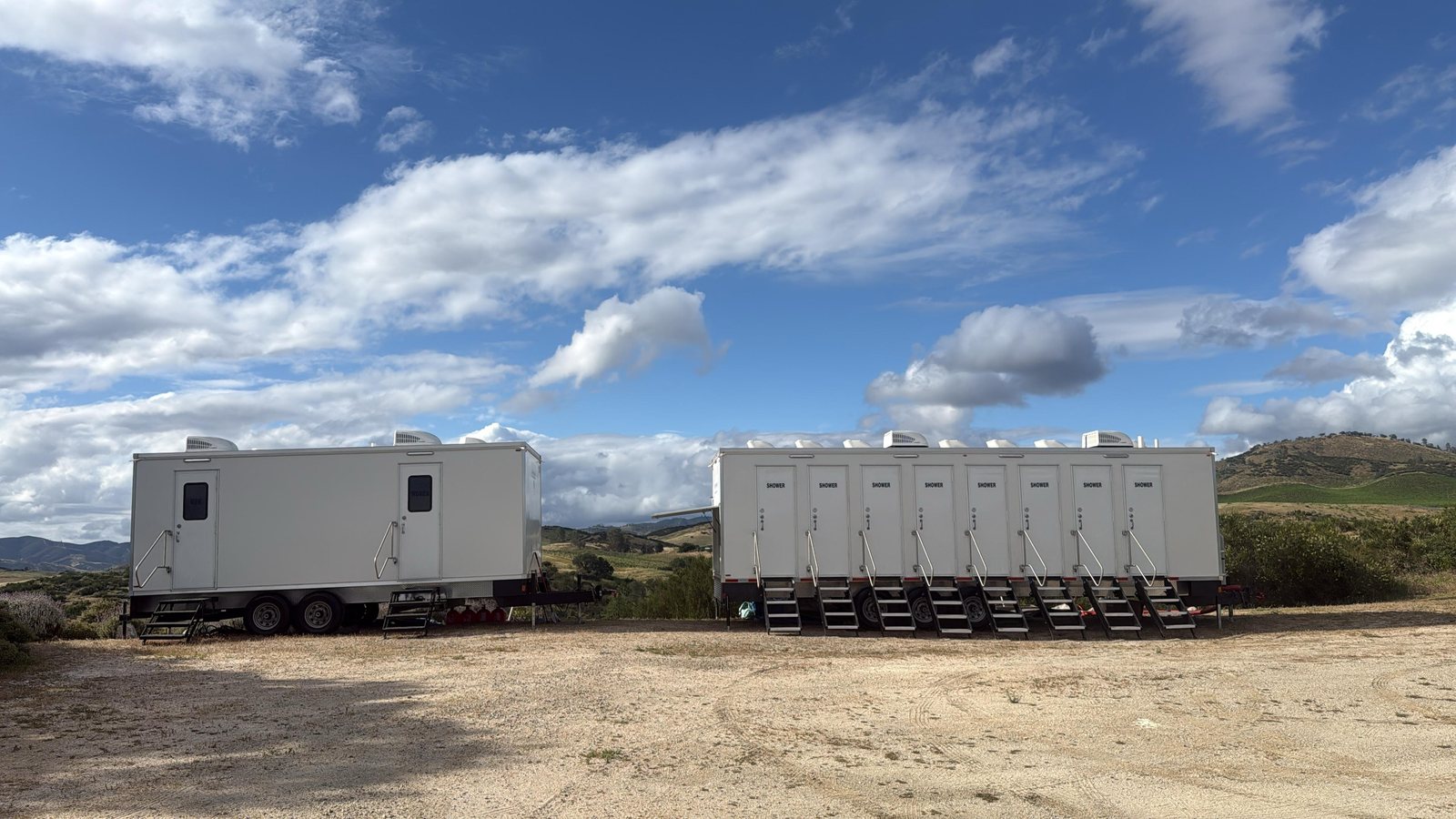
Add the short-notice factors next. Camps grow. A rebuild site starts with a crew of 20 and ends with 50. A fire camp may double in a day. Ask for a plan that can add a trailer on the same service route instead of a plan that fits today's head count exactly. Extra trailers in a line cost little compared with a camp that has a two-hour wait.
Weather changes the answer, too. On cold mornings in Central Oregon, people shower longer because they are warming up. In summer heat, the whole crew showers at once after a hot shift. Rain pushes everyone inside at the same moment. A plan that works in July may fail in November.
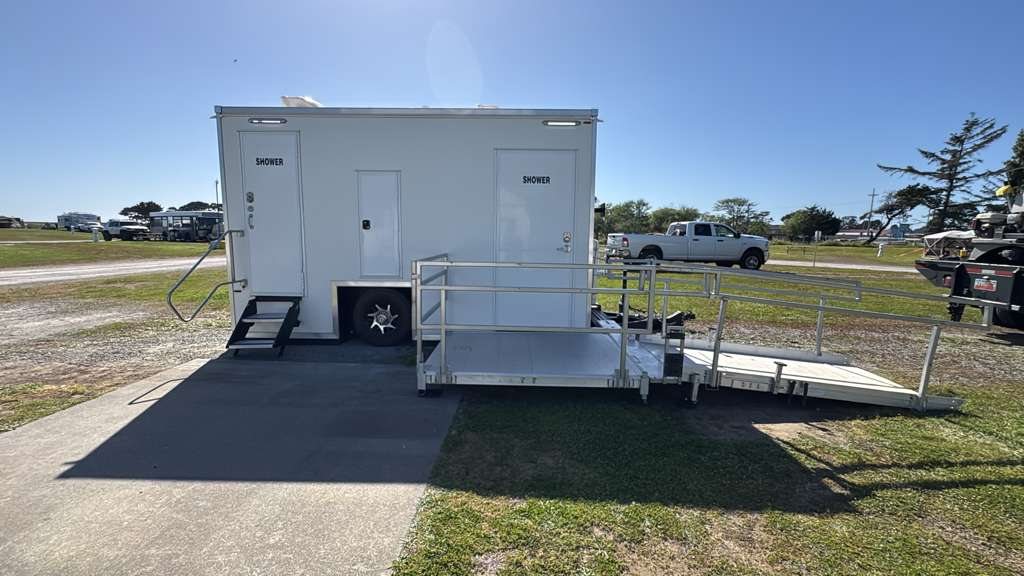
Accessibility belongs in the count from the start. If anyone on site needs an accessible unit, say so at ordering. Place it on level, hard ground, closest to the parking or work area. Do not count on adding it after the camp is set up, because moving a trailer once it is hooked up is slow.
Finally, plan the service. A trailer that serves 80 showers a day needs service on a schedule that matches, with cleaning, supplies and a tank pump-out. Write your expected daily shower count into the order. Dispatch uses that number to set the visit schedule, and the visits keep the trailers clean through the last day of the camp.
Site prep for a shower trailer in Oregon: water, power and wastewater
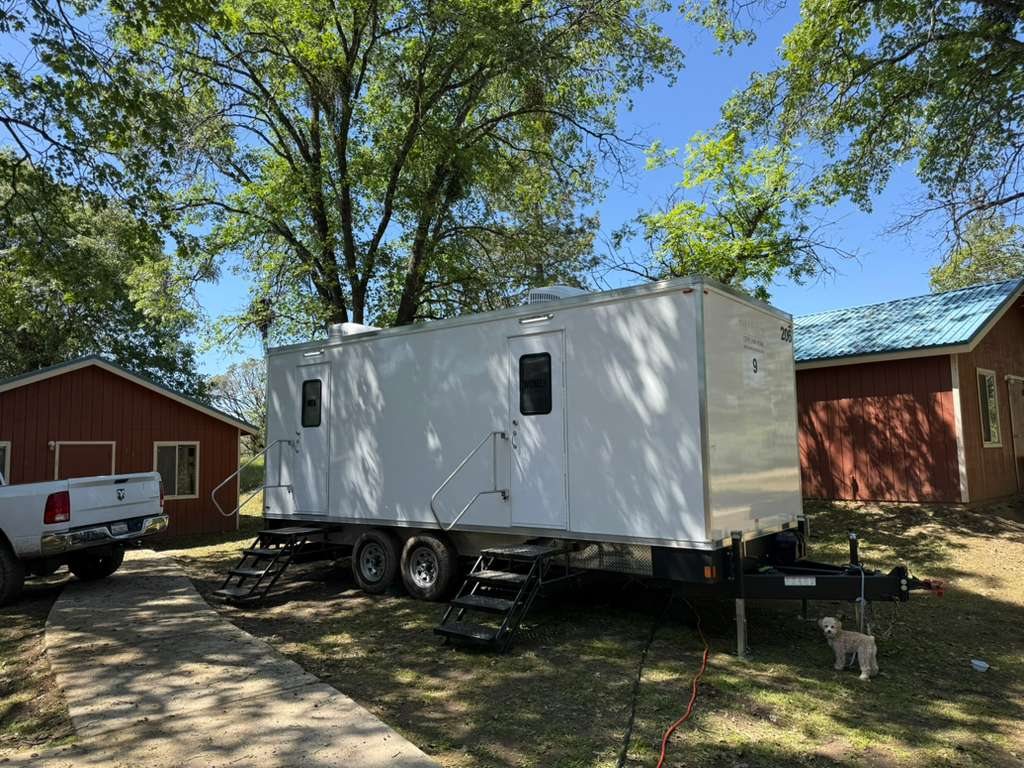
A shower trailer needs three things from a site: level ground, a power source and a plan for wastewater. Getting those right before delivery avoids most problems on the day. A short call or a few photos of the pad is enough for dispatch to catch the big ones.
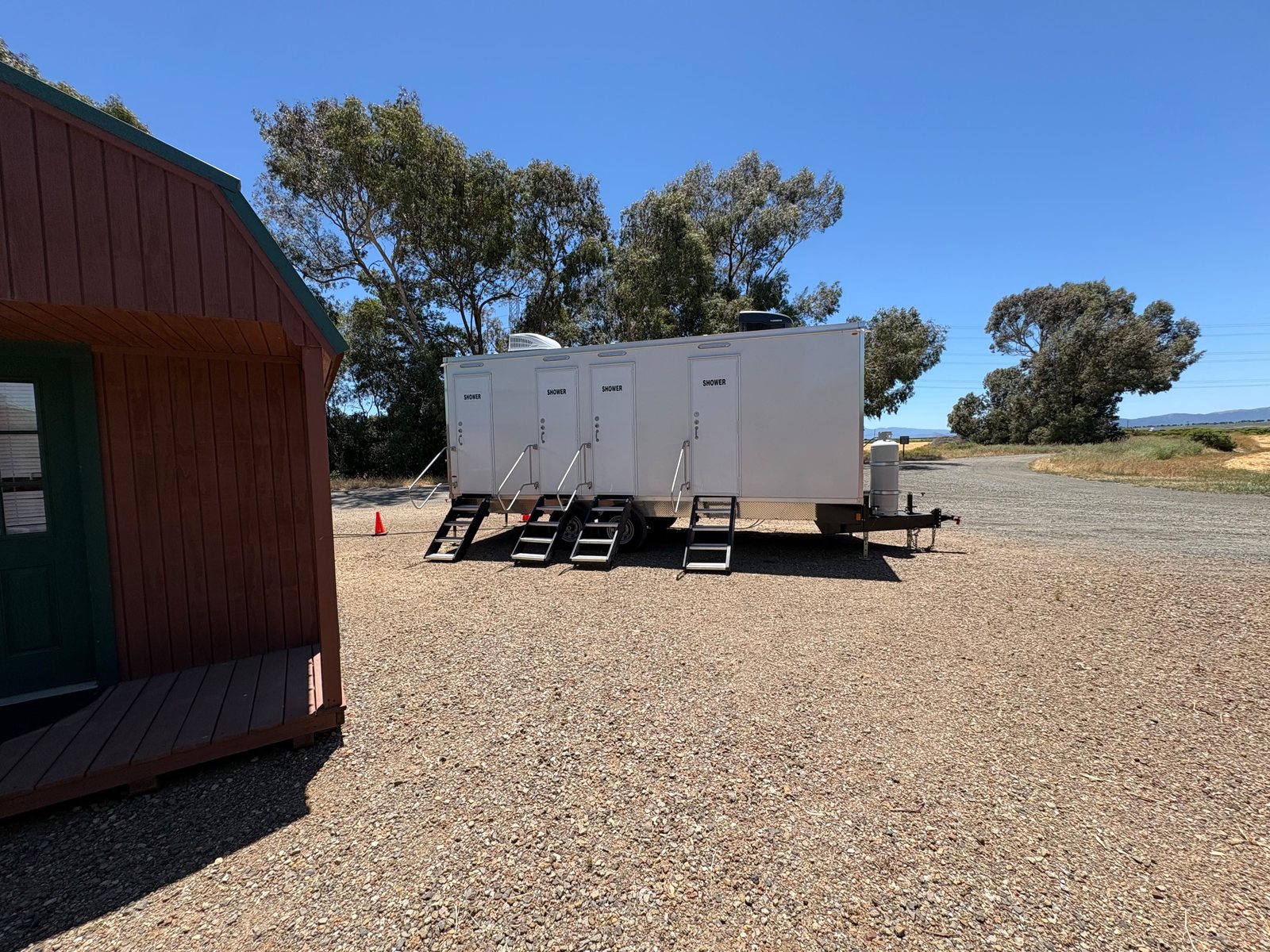
Start with the ground. A trailer needs a flat, firm pad. In western Oregon, grass and dirt soften quickly in the rainy season, so gravel, planking or pavement is better. On the high desert, the ground is hard but dusty, and a rocky pad can be uneven. A slope of more than a few degrees may need blocking, and dispatch should know before the truck leaves.
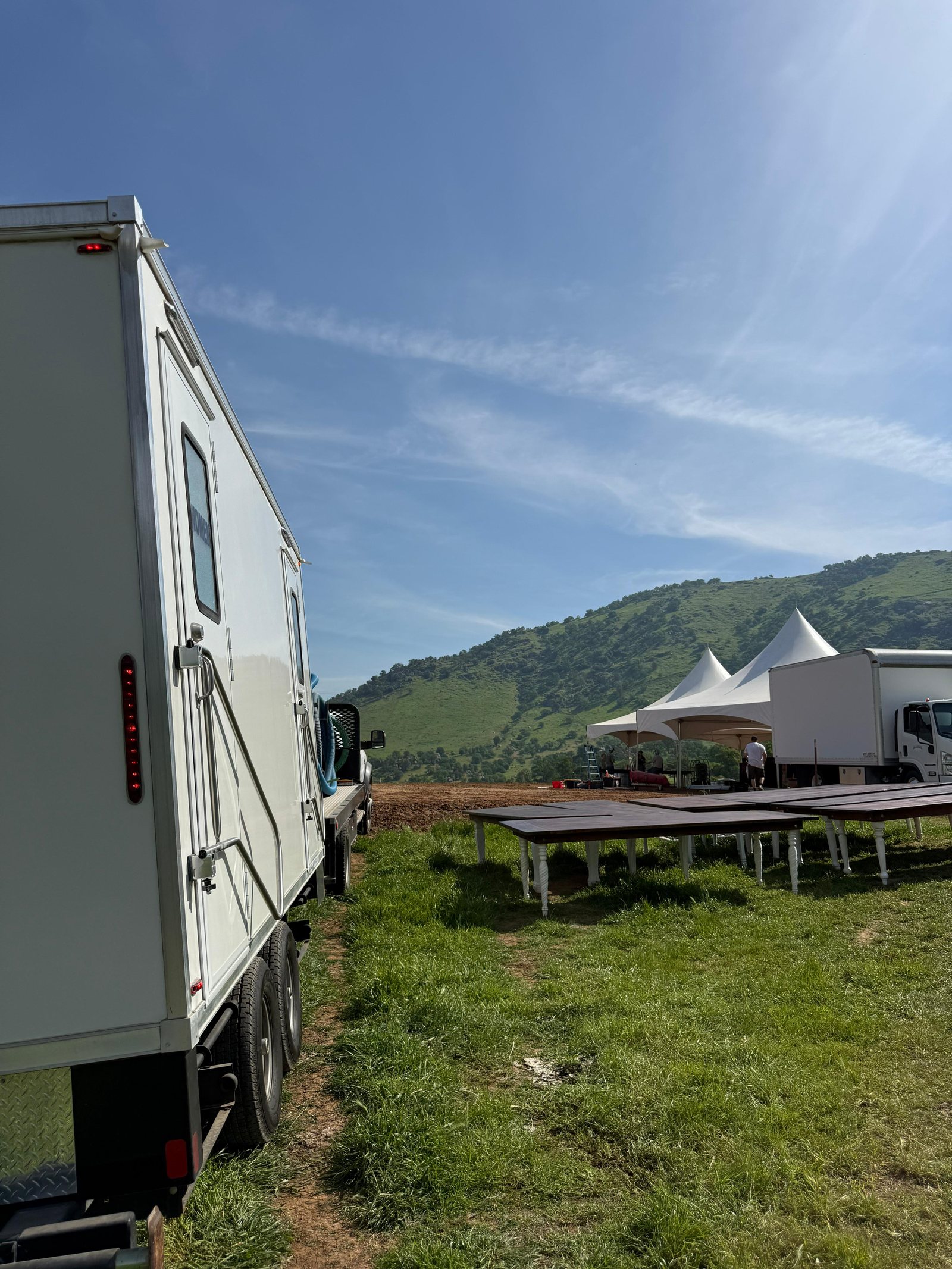
Next, think about access. A multi-station trailer is long and heavy. The path from the road to the pad needs wide gates, overhead clearance and a turning area for the tow vehicle. Vineyard driveways, farm lanes and school service roads are often narrower than they look. Measure the narrowest gate and tell dispatch.
Power comes next. Some sites have a dedicated circuit near the pad. Others, like remote fire camps, coastal pullouts and high-desert pads, have nothing, and a generator fills the gap. Tell dispatch what is on site. Do not guess about the circuit, since a shared circuit with other loads can trip at the worst moment.
Water is the third piece. Self-contained trailers carry their own supply, which suits a remote pad. If a site has a nearby water source, a hose connection may stretch the time between fills. Either way, hot water depends on the power setup, so the water and power plans should be made together.
Wastewater is the part people forget. It is collected in the trailer's holding tank and pumped out on service visits by licensed haulers, then taken to approved disposal. It is never discharged to a storm drain. For questions about wastewater rules on a particular property, the Oregon Department of Environmental Quality is the agency to ask, and its website at the link below lists the programs.
Finish with the walkway and light. People will walk to the trailer in the dark in winter. A dry path, a handrail where the ground slopes and a light by the door make a big difference. Mavirus plans these details with you during the site check, and a quick photo of the pad is enough to get it right.
Sources: Oregon Department of Environmental Quality
What to ask a shower trailer company before a fire-season deployment
Fire season in Oregon now runs long and can start fast. In 2025, 94% of fires on state forest land stayed at 10 acres or less, which tells you the system works most of the time. When it does not, camps and shelters need showers within a day. Asking the right questions before the season saves hours in an emergency.
Ask first about self-containment. A fire camp, an evacuation shelter or a rebuild lot may have no water and no power for days. Confirm that the trailer carries its own water and wastewater tanks and has a generator option. State emergency officials tell households to be ready to manage on their own for at least two weeks, and a camp should plan the same way. The Oregon Office of Emergency Management publishes the guidance at the link below.
Ask about service. A trailer without service turns into a problem by day three. Find out how often visits happen, what each visit includes and how the schedule changes if the camp doubles. Ask who you call if something fails at night, and what the answer is.
Ask about paperwork. Agencies and incident teams often have required forms, insurance certificates and a written scope. A company that has worked with government buyers will ask for your requirements sheet before you offer it. Get everything in writing, and keep the dispatcher's contact in your phone.
Ask about scale. Fire camps change size without warning. The question to put to any company is how quickly it can add a trailer on the same route. It also helps to ask whether the company can send a restroom or laundry trailer to the same camp on the same order. A camp that has showers but no laundry will want laundry within the week.
Ask about placement. A camp needs a hard base and a dry walkway, and the trailer has to sit where it does not block fire access. Ask whether the company will do a site check by phone or photo. Oregon and California agencies often share resources, and temporary shower trailer rentals in Northern California may be useful when a regional response crosses the state line, so ask whether your vendor can coordinate across borders.
Finish by asking for the plan in writing. A one-page plan that lists the number of trailers, the service schedule, the contact and the power source gives everyone on the incident the same picture. Share it with the logistics section or the contracting office before the first trailer arrives.
Sources: Oregon Office of Emergency Management
Rent or buy: when a shower trailer rental makes more sense for a recurring need
Some customers call after a camp season, a film shoot or a long project and ask whether they should buy a shower trailer. The honest answer depends on how often you will use it, how long each use lasts and who will maintain it. For most Oregon customers, renting wins, and the reasons are practical.
Start with use. A trailer you need for six weeks a year sits idle the other forty-six. It still needs storage, insurance, registration and a place to park. Seasonal harvest camps, summer youth programs and film shoots all fit that pattern, and rentals match the way those jobs actually work.
Next, think about maintenance. A shower trailer has water heaters, pumps, plumbing, drains and a wastewater tank. Cleaning, restocking and tank service are daily jobs on a long deployment. When you rent, those jobs belong to the rental company and happen on a schedule. When you buy, they belong to you.
Consider size. A project that starts with 20 people and grows to 80 outgrows a single purchased trailer in a month. A rental can add more trailers to the same site, and drop them when the camp shrinks. A purchase locks you into the size you guessed at the start.
Consider location. Oregon projects range from the coast to the high desert. Moving a trailer to a remote pad takes a tow vehicle, a driver and planning. Rental delivery and pickup are part of the package, and the same crew knows how to set up on gravel, slopes and tight access roads.
A long-term rental suits work that lasts months, when a one-week event rental is too short and buying a trailer makes no sense. Rebuild sites in the Santiam Canyon and Rogue Valley run for months, and state recovery programs through Oregon Housing and Community Services fund work that lasts years. A multi-month rental keeps weekly service in place and avoids the cost and storage of ownership, and the trailer goes back when the work ends.
If you still lean toward buying, rent first. A month of real use shows how many stations you need, how many people use them and what service looks like. That data makes a purchase decision easier. Most customers who rent for a season decide they would rather keep renting.
Sources: Oregon Housing and Community Services, ReOregon