Home / Services / Hawaii
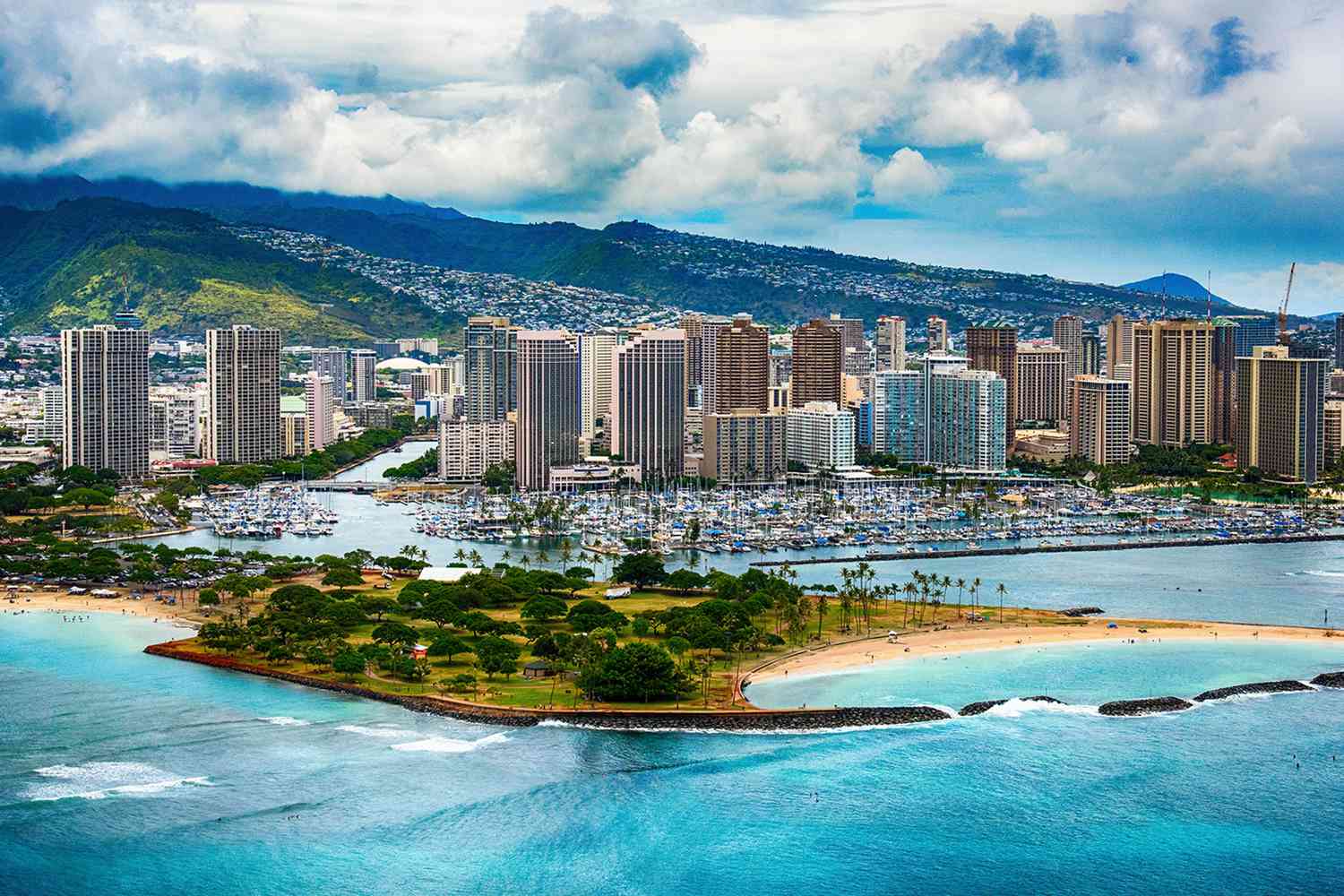
Oahu, Hawaii

Refrigerated Freezer Trailer Rentals in Hawaii

Mavirus Group rents refrigerated and freezer trailers across Oahu. When a walk-in dies or a storm knocks out the power, cold storage has to show up fast. And on an island, a new unit cannot just drive in from the next county. It comes across the Pacific, and that takes days. So we are the first call when the cold has to be back today.

Oahu cold storage

The first call for refrigerated trailers on Oahu

Mavirus Group works cold storage for governments and disaster teams across the country. We are registered on SAM.gov as a federal contractor. We partner with FEMA, Cal Fire, and the US Forest Service. We hold an A+ rating with the BBB. And we are fully licensed and insured, with more than 11,000 deliveries behind us. Hawaii is a hard place to keep things cold. Nearly all of its frozen and chilled food rides in across the Pacific. So restaurants, agencies, food banks, and military teams on Oahu need on-island cold storage they can count on. Our refrigerated and freezer trailers give them that backbone.

24/7emergency dispatch
Oahu-widesame-day staging
11,000+deliveries completed
One unitcooler or freezer
Our Freezer Trailer Fleet

One cold storage trailer that runs cooler or freezer

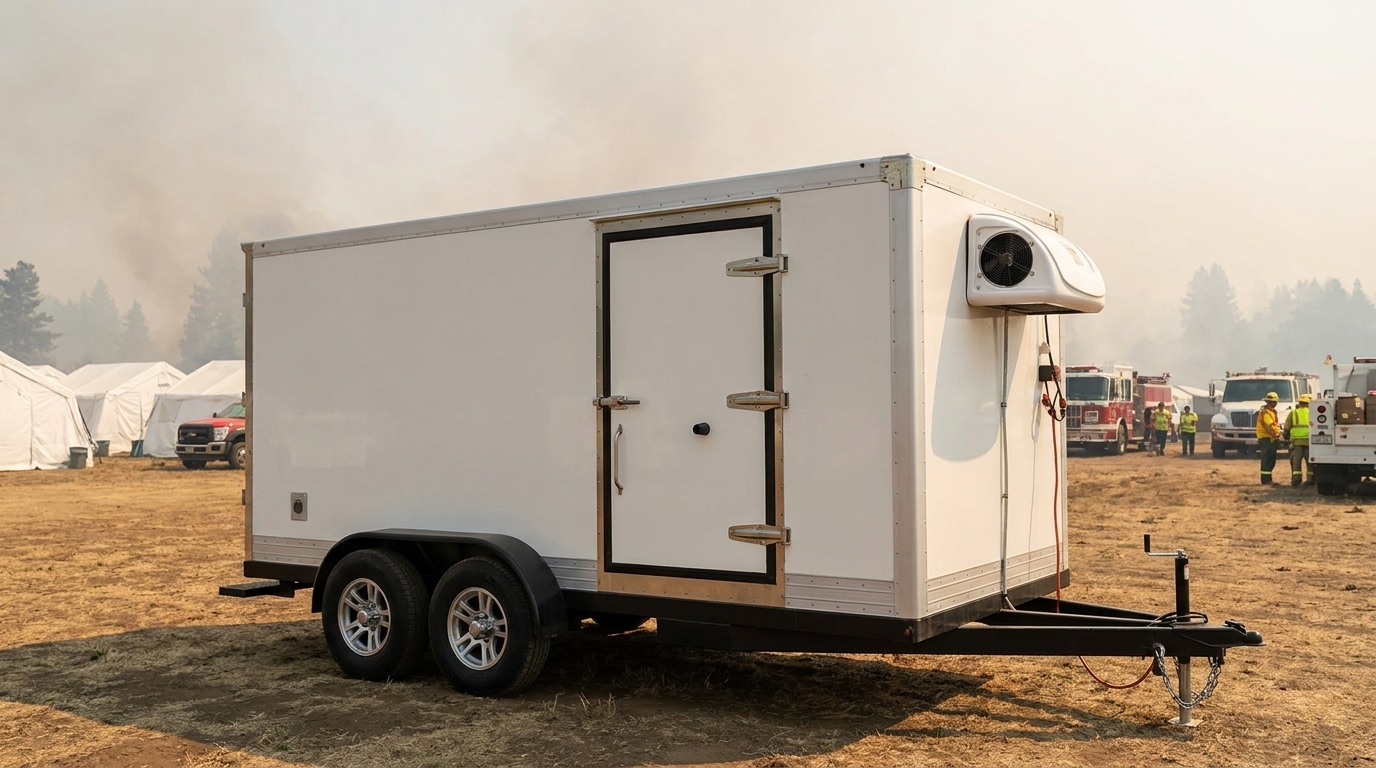
A Mavirus portable freezer trailer holding pallets of frozen product, ready for Hawaii delivery
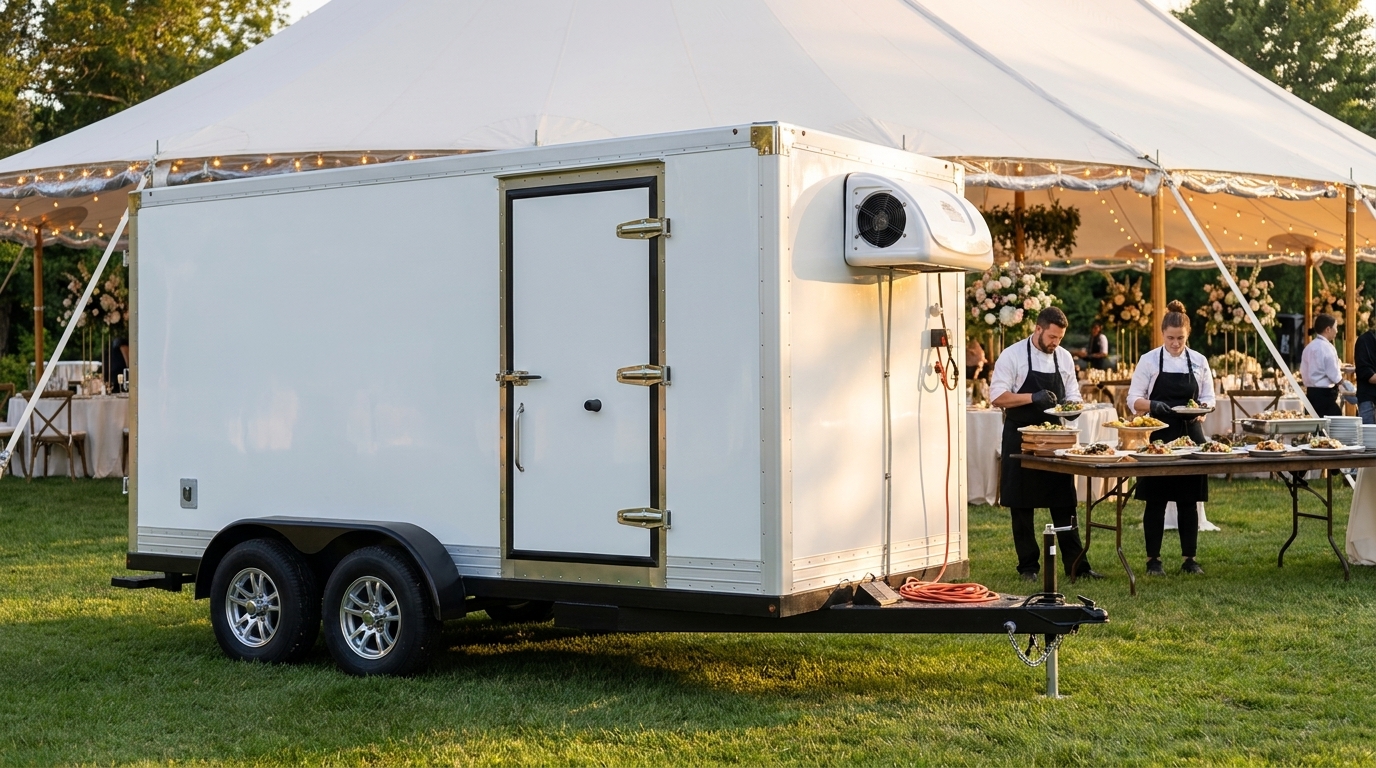
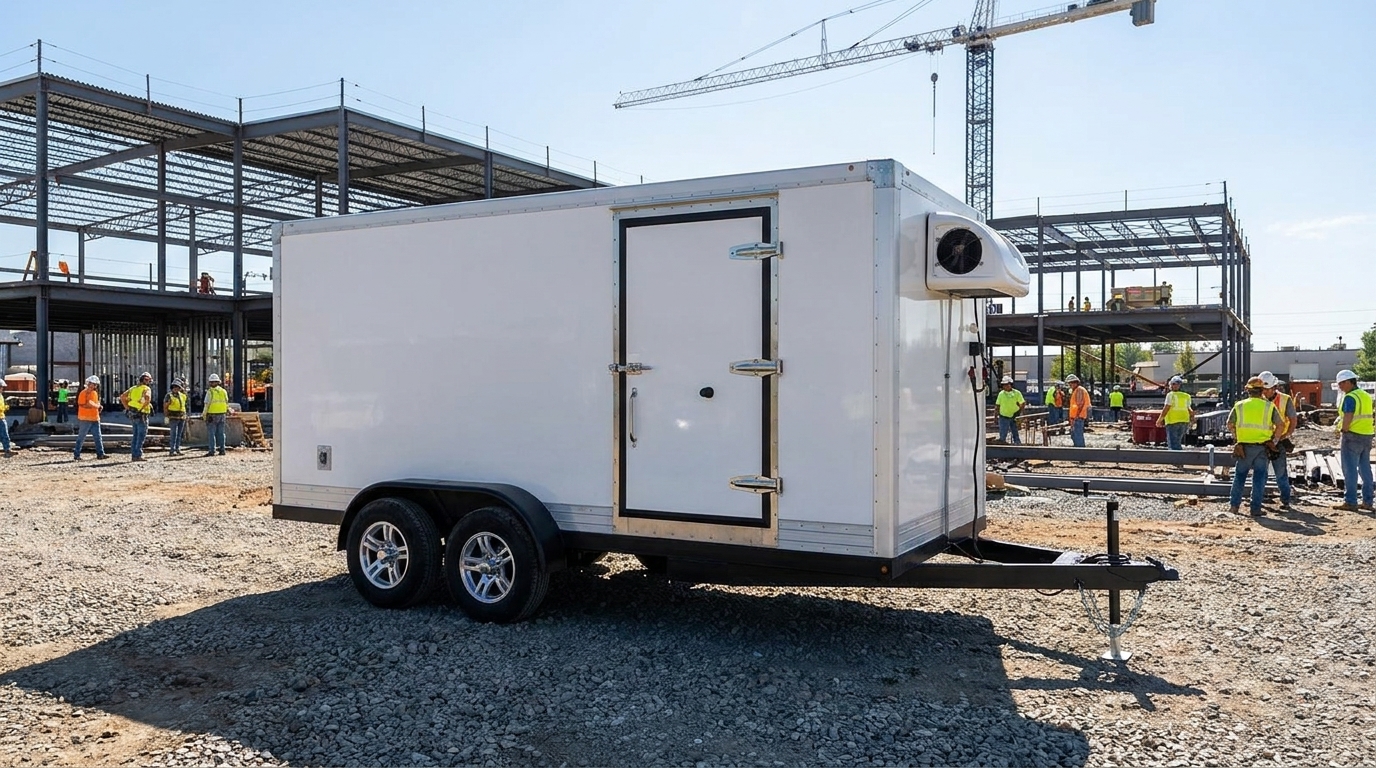
A Mavirus freezer trailer, sub-zero cold storage that plugs into ordinary power

Every trailer we send to Hawaii is a dual-purpose box. It runs as a refrigerator or a freezer on a digital setpoint. It holds from about +50 degrees down to about -10 degrees. So the same unit that backs up a produce cooler at +38 can flip to hold frozen protein at 0 or below. On an island, where a caller may need cold one week and frozen the next, that swing matters.

Power is the part that keeps island siting simple. The trailer pulls from a standard 120V, 20-amp circuit within 100 feet. That is ordinary building power, not a 240-volt hookup. And when there is no grid at all, we bring a generator. A self-contained, mobile unit like this works at a resort dock, a remote farm, or a grid-down staging yard.

We provide the trailer, the delivery, and the placement. You get digital setpoint control your team can see and adjust. We keep the roles clear. We bring reliable cold or frozen space, and your operation runs its own cold-chain records to whatever your food-safety plan asks. Need several units for a big job? We place them together as one coordinated drop.

Where they work

Refrigerated trailers built for island demand

Hawaii runs on a thin cold-storage margin. About 85 to 90 percent of its food is imported. At any moment the islands hold only a five to seven day supply. A container ship takes roughly four days to reach the state from the nearest mainland port. That shapes every use case below. When cold storage fails here, the fastest fix is a refrigerated or freezer trailer on the ground the same day.

Disaster and emergency response

Hurricane, wildfire, and FEMA staging cold storage

Oahu sits in the Central Pacific hurricane basin. The season runs June through November, and the island has felt real near-misses. Hurricane Douglas passed within about 30 miles of Oahu in 2020, close enough to trigger evacuations and heavy surf warnings. Oahu also carries its own tsunami exposure, with Waikiki and the whole south shore mapped for evacuation. Storms like these hit cold storage the same way every time, because the power goes out for days, and when the grid dies for that long, the walk-in dies with it.

Oahu also felt the 2023 wildfire crisis directly, even though the fire itself burned on Maui. Thousands of displaced residents were flown to Oahu in the weeks after, and the Hawaii Convention Center in Honolulu stood up as a mass-care shelter, one of the largest congregate shelter operations in state history. Feeding people at that scale needs frozen and chilled holding on site, often with no cold room to spare. The 2021 Red Hill fuel spill showed the same pattern from a different angle, forcing thousands of JBPHH families out of their kitchens and into temporary living almost overnight.

This is where our trailers earn their keep. A dual-purpose refrigerated and freezer trailer holds relief food, water, and cold medicine at setpoint. Grid or no grid, a generator keeps it cold. We can stage units ahead of a forecast storm, then roll them to shelters and handout points across Oahu when the emergency team says go. Resupply to the islands is slow, so pre-staging cold assets close to where people actually need them is central to how Oahu plans, and a portable refrigerated trailer is easy to stage and move.

Mavirus Group is built for this. Our SAM.gov registration and our FEMA, Cal Fire, and US Forest Service partnerships carry real weight here. The City and County of Honolulu's emergency managers get a provider who already knows how government deployment works. We bring large-scale gear, multi-unit basecamp setups, and 24/7 dispatch. When an Oahu disaster needs cold storage now, we are the first call.

Row of white refrigerated trailers staged at a Hawaii disaster relief point of distribution near palm trees, emergency tents in background
White refrigerated trailer parked at the loading dock of a Hawaii resort kitchen, tropical landscaping and blue sky
Restaurants, resorts, and grocery

Walk-in failures and tourism surge on Oahu

Tourism runs the Oahu economy. And it drives cold-storage demand all year. Oahu drew about 5.8 million visitors in 2024. The peak months run hot. July 2024 brought 552,657 visitors to Oahu, and December brought 533,420. Big events pile on top. In June 2024 the Festival of Pacific Arts and Culture brought more than 2,000 delegates from 26 nations through Honolulu. Now picture a Waikiki hotel, full for the week, when its walk-in cooler quits. There is no time to wait on a repair. And there is no time to ship a cooler from the mainland.

The walk-in cooler is the heart of any kitchen. It holds the proteins, the produce, the dairy, and every prepped item the line runs on. When it goes down, the kitchen goes with it. On an island this hurts more than on the mainland. You cannot move that food to another building fast, and you cannot truck in cold storage from the next county, so the loss stacks up by the hour. A refrigerated trailer parked at the door, cold within the hour, is the line between staying open and dumping a week of food.

Grocers and distributors face the same math, just bigger. Peak visitor weeks surge the cold chain. Gear breaks down. Overflow piles up past what the building holds. And the island does not keep much frozen and chilled space to spare. Our dual-purpose trailers add cooler or freezer room right where it runs short. That might be backup at the Honolulu piers, overflow for a Kapolei distributor, or holding space while a store gets remodeled, wherever the built-in cold gives out.

For restaurants, hotels, caterers, and grocers across Oahu, we are the fast answer. One call. A trailer delivered. Standard power or a generator we bring. Cold or frozen holding at the temperature the food needs. That speed is why Oahu kitchens keep our number on the wall.

Military and government

Federal cold storage for installations and field operations

Hawaii holds one of the densest clusters of US military bases in the country. The military runs a huge standing cold chain here. Think mess halls, commissaries, field feeding, and medical supply. The bases bring in nearly 15 billion dollars a year and support around 102,000 jobs. Joint Base Pearl Harbor-Hickam alone counts more than 66,300 people, the largest per-capita post in the islands. Schofield Barracks in central Oahu is home to the 25th Infantry Division and the 8th Theater Sustainment Command, about 11,000 soldiers. Marine Corps Base Hawaii at Kaneohe Bay hosts the 3rd Marine Regiment.

For a government provider, that is a deep, steady demand base. Field-exercise feeding. Surge and backup cold storage. Holding space during a repair or an outage. Cold storage for defense support to civil authorities. All of it calls for refrigerated and freezer space that drops in fast and runs anywhere. Our trailers fit a base or a field site the same way. They pull from a standard 120V, 20-amp circuit, or from a generator we bring. No high-voltage hookup needed.

Government and military buyers work off credentials, not promises. Mavirus Group is registered on SAM.gov as a federal contractor. We hold an A+ BBB rating. We are fully licensed and insured, with more than 11,000 deliveries behind us. And our FEMA, Cal Fire, and US Forest Service work shows we already operate inside the government world at scale.

Maybe you need one trailer to back up a commissary cold room. Maybe you need a bank of them for a field feeding job. We bring large-scale gear and 24/7 dispatch either way, to every base and agency site in the islands. When a federal or state team here needs cold storage placed fast and documented clean, we are the first call.

White refrigerated trailer at a government field operation staging yard in Hawaii with generator alongside, mountains in the distance
Who we serve

Cold and frozen capacity for every Oahu operation

Food banks and feeding programs

Disaster feeding, commodity storage, and mass-care all need frozen and chilled holding at scale. Our trailers put that space on site across Oahu, on short notice.

City and County of Honolulu emergency management

Hurricane and wildfire staging, points of distribution, shelter cold storage, and outage backup. We stage units ahead of a storm and roll them where the emergency team points us.

Agriculture and seafood

The Honolulu Fish Auction moves 70,000 to 90,000 pounds of fish a day. North Shore coffee and produce harvests spike too. Our trailers cover the surge, the downtime, and the growth for processors and farms.

Healthcare and schools

Hospitals, care homes, and school meal programs cannot lose cold storage in an outage or a remodel. A refrigerated trailer keeps food and cold supplies safe until the permanent gear is back.

Events and festivals

Peak-season conventions, concerts, and cultural festivals bring food service that outruns the building. We supply temporary frozen and cold holding for the length of the event.

Harbor and airport logistics

Nearly all island food moves through Honolulu Harbor and Daniel K. Inouye International Airport. Our trailers add backup and surge cold right where the chain is tightest.

White refrigerated trailer parked at the loading dock of a Hawaii resort kitchen, tropical landscaping and blue sky
Island climate

Warm, humid, and unforgiving to a cold-storage gap

Oahu runs warm and humid all year. Figure 75 to 90 degrees in the coastal towns, with hard sun on the leeward Kapolei and Waianae side and steadier rain on the windward Kaneohe side. In that heat a refrigeration gap turns into spoilage fast. And outdoor events, construction, farming, and relief work all run where the cold cannot lapse.

The heat also wears on permanent refrigeration. That is part of why walk-ins fail here. When the heat, a holiday rush, and a broken compressor line up at once, a refrigerated trailer holding steady at setpoint is the backstop that saves the product.

On top of the heat sits hurricane season, June through November. Storms bring the outages that knock fixed refrigeration offline for days. A generator-fed unit keeps food and medicine cold when the grid is down, which is the exact way island storms break things.

The demand base

A resident island that swells every peak season

Cold-storage demand on Oahu follows where people live and where visitors pile in on top of them. The island holds close to a million residents, plus a steady flow of hotel and short-term visitors on any given day. Peak tourist months push the built-in cold chain past its limit, which is exactly when a walk-in failure or a grid outage does the most damage.

Oahu visitor volume, peak months vs. average
July peak552,657
December peak533,420
Monthly average~483K
2024 Oahu visitor arrivals by month, with a monthly average from the 5.8 million annual total. Source: Hawaii Tourism Authority.
Why Count on Us

Why Hawaii operators call us first

Cold that shows up the same day

When a walk-in quits, the clock starts. We put a running, mobile refrigerated trailer at your door fast, because our fleet stages right here on Oahu. No shipping wait, no schedule to check.

One trailer, cooler or freezer

Every unit runs as a fridge or a freezer on a digital setpoint, from about +50 degrees down to about -10 degrees. Need +38 for produce this week and 0 for frozen protein next week? Same trailer, new number.

It runs through a blackout

Oahu storms take the grid down for days. Our trailers keep holding on a generator we bring, so relief food and cold medicine stay safe. No grid, no problem.

Standard power, simple siting

A portable freezer trailer here plugs into an ordinary 120V, 20-amp circuit within 100 feet. There is no 240-volt hookup to chase, which is why a self-contained unit drops onto a Waikiki dock, a North Shore farm, or a grid-down staging yard with equal ease.

Credentials a government buyer trusts

We are SAM.gov registered, A+ with the BBB, fully licensed and insured, with more than 11,000 deliveries done. Agencies, harbors, and bases clear our units onto site without a fight.

Already on your island

The whole point of renting from us is that you are not waiting on the Pacific. Our fleet stays staged on Oahu, and we serve private operators and public agencies alike, staging large and multi-unit setups so the cold is here before you need it.

Customer Stories

A few Hawaii jobs we have handled

Waikiki resort, peak-week walk-in failure

A resort in Waikiki lost its main walk-in during a fully booked week. A new cooler was days out, and the kitchen was holding thousands of dollars of food. We sent a dual-purpose refrigerated trailer and had it cold on the property. The kitchen moved product straight in. Not one service day lost.

Honolulu food bank, post-disaster feeding surge

After the 2023 shelter intake surge, a Honolulu food bank had to stand up mass feeding with no spare cold storage. We delivered several freezer and refrigerated trailers to the handout site. Our generators ran them where there was no grid. The frozen relief food and fresh product stayed close to the community it fed.

Kapolei distributor, storm power outage

A storm cut grid power to a Kapolei distributor for days. A full warehouse of frozen and chilled product was at risk. We staged generator-fed trailers on site and flipped them between cooler and freezer as needed. The distributor rode out the outage without losing the load.

Around the Island

Every Oahu metro and district, served

Honolulu and Urban Oahu, Hawaii

Honolulu and Urban Oahu

The population and logistics center of the state. Urban Honolulu carries the densest run of restaurants, hotels, and hospitals, plus the Honolulu Harbor and airport cold chain. Walk-in failures, distributor surge, and event demand hit hardest here.

Leeward Oahu (Kapolei, Kalaeloa, Waianae), Hawaii

Leeward Oahu (Kapolei, Kalaeloa, Waianae)

The industrial and harbor corridor, anchored by Kalaeloa Barbers Point Harbor about 19 miles southwest of Honolulu. Distribution, staging, and west-side food service all lean on temporary cold storage. The harbor makes a natural staging yard for large drops.

Windward Oahu (Kaneohe, Kailua), Hawaii

Windward Oahu (Kaneohe, Kailua)

Marine Corps Base Hawaii and a growing restaurant and grocery base sit on this side, along with school and county facilities that need outage backup. Wetter weather here means we plan power and access a little differently than on the leeward side.

Central Oahu and the North Shore, Hawaii

Central Oahu and the North Shore

Wahiawa, Schofield Barracks, Wheeler Army Airfield, and the farm country running out to Haleiwa. Military cold-chain demand and diversified agriculture, including coffee and produce, both lean on portable capacity out here.

Local realities

Food safety, logistics, and siting in the islands

Hawaii food operations follow state Department of Health rules that track the FDA Food Code. Those set cold holding at or below 41 degrees for refrigerated food, and 0 degrees or below for frozen. A rented trailer that holds food has to hit those marks every time. Our dual-purpose units do, on a digital setpoint. Many processors and public cold rooms also run HACCP food-safety plans.

Because our fleet stages right here on Oahu, a client never waits on a shipping schedule to get cold storage moving. Lead time still matters for the big multi-unit jobs, but the trailer itself is never sitting on a barge somewhere between islands.

Siting stays simple on purpose. Our trailers pull from a standard 120V, 20-amp circuit within 100 feet, or from a generator we bring. So they run on remote sites, older buildings, and grid-down staging yards, with no high-voltage service. Resorts, harbors, and military bases each carry their own access rules, and a licensed, insured, SAM.gov-registered provider with real deployment history clears those faster than an outfit the gate guard has never heard of.

Service Area

Refrigerated and freezer trailer rentals across Oahu

We deliver to every major town on Oahu. Do not see your area? Call us. We serve the whole island.

HonoluluKapoleiKalaeloaWaianaePearl CityWaipahuMililaniWahiawaEwa BeachKaneoheKailuaHaleiwaWaikikiAieaKahukuSchofield Barracks
Reviews

What Hawaii operators say

Marcus T., restaurant general manager, Honolulu
Marcus T.restaurant general manager, Honolulu
★★★★★

Our walk-in died on a Friday night with a full house. I called, and a refrigerated trailer was running in the lot the next morning. On this island that speed is the whole ballgame. Nothing else was coming to save us.

Leilani K., resort operations, Waikiki
Leilani K.resort operations, Waikiki
★★★★★

We lost cooler space during a sold-out week and could not risk the food. They set a dual-purpose trailer and dialed in the temperature we needed. The kitchen never closed. Professional from the first call to pickup.

David N., City and County of Honolulu emergency management
David N.City and County of Honolulu emergency management
★★★★★

We staged their freezer trailers before a storm and rolled them to our handout sites when the grid went down. The generators kept them cold through the whole outage. These folks know government work.

Grace P., food bank logistics, Oahu
Grace P.food bank logistics, Oahu
★★★★★

For a big feeding job we needed frozen space fast and at scale. They brought several trailers and had them cold and ready. That space kept relief food close to the people who needed it.

Sam H., distributor operations, Kapolei
Sam H.distributor operations, Kapolei
★★★★★

A multi-day outage put our whole frozen load at risk. They staged generator-fed trailers and we rode it out with zero loss. Having a provider already on the island is worth everything here. If the job reaches ARIZONA, our freezer trailer rentals near ARIZONA page has the units, sizing and booking steps.

FAQ

Frequently asked questions

Do you rent refrigerated and freezer trailers on all the Hawaiian Islands?
We are an Oahu-based operation and currently serve Oahu only. We are not able to ship trailers to Maui, Hawaii Island, or Kauai. If your project is on Oahu, from Honolulu and Kapolei to Kaneohe and the North Shore, we stage units locally so you are not waiting on gear from the mainland.
How fast can a trailer be delivered in an emergency?
We run 24/7 dispatch. When a walk-in quits or a disaster stands up, we move to get a running trailer on your site fast, often same day, because our whole fleet already stages on Oahu.
Is one trailer a refrigerator or a freezer?
Both. Every unit runs as a refrigerator or a freezer on a digital setpoint. It holds from about +50 degrees down to about -10 degrees. The same trailer can back up a produce cooler at +38 or hold frozen product at 0 or below. You set the number you need.
What power does a trailer require?
Two options. Either the site gives us a 120V, 20-amp circuit within 100 feet, which is normal building power. Or we bring a generator, with no high-voltage hookup, which is why the trailers run on remote sites, older buildings, and grid-down staging yards even when there is no live circuit anywhere nearby.
Can the trailers run during a hurricane power outage?
Yes. On a generator the trailer keeps holding whether or not the grid is up, which is exactly what island storms call for. Hurricanes here knock out fixed refrigeration for days. A generator-fed unit keeps food, medicine, and relief supplies cold the whole time.
Can you handle government and military contracts?
Yes. Mavirus Group is registered on SAM.gov as a federal contractor and partners with FEMA, Cal Fire, and the US Forest Service. We support county and state emergency teams, federal agencies, and military bases across Hawaii, with the licensing, insurance, and scale that government work needs.
Why is on-island cold storage so important in Hawaii?
Replacement cold storage cannot reach an island fast. When a walk-in fails here, there is no truck from the next county. A new cold room ships across the Pacific, and that takes days. So a portable refrigerated or freezer trailer, delivered locally, is the fastest fix you can count on.
Do you provide temperature monitoring or logging?
Our trailers have digital setpoint control your team can see and set. We supply the gear and the cold space. Your operation keeps its own cold-chain records to whatever your food-safety plan asks. We do not run a separate monitoring service.
Can you supply multiple trailers for a large operation?
Yes. We bring large-scale gear and multi-unit basecamp setups. For disaster feeding, a field operation, a festival, or a big distributor, we place several units together and back them with generators where there is no grid. It all runs as one coordinated deployment.
What kinds of businesses rent from you in Hawaii?
Restaurants and hotels. Grocers and distributors. Food banks and feeding programs. County and state emergency teams. Federal agencies and the military. Hospitals and schools. Farms and seafood plants. Event crews. Anyone who needs cold or frozen holding placed fast in the islands fits.
How long can I rent a trailer?
As long as you need. We cover short emergencies like a walk-in failure or a storm outage. We also cover longer runs like a remodel, a harvest season, a build, or a standing agency contract. We scope the rental to your timeline.
How do I get started?
Call our 24/7 line or ask through the site. Brief us on the island, the site, whether you need cooler or freezer temps, and your timeline. We will get a trailer moving. On an island where cold storage cannot come quickly from off-island, we are the first call.
Logistics Notes

Hawaii cold storage rental library

What 2,400 miles of ocean means for your cold storage in Hawaii

No state leans on its cold chain like Hawaii does. The reason is distance. The islands sit about 2,400 miles from the nearest mainland port. Nearly everything that gets chilled or frozen in a Hawaii kitchen, store, hospital, or mess hall crossed the Pacific to get here. Most of it arrived already cold. When cold storage fails on an island, there is no truck from the next county. A replacement comes by ship or plane. That takes days.

The scale of the import runs deep. One peer-reviewed benchmark study put Hawaii at 88.4 percent of its available food coming from imports. About 400 shipping containers dock in Honolulu every day. That adds up to roughly 1.1 million tons of food a year. Almost all of it has to stay cold from the dock to the shelf.

Modern distribution makes the margin thinner. Grocery and restaurant supply now runs just in time. The big distributors no longer keep large buffer warehouses. That holds costs down on a normal week. But if shipping hiccups, the shelves and the walk-ins empty in days, not weeks. State food-resilience plans have flagged this and asked for more refrigerated storage.

The cold storage that does exist is thin and clustered. The largest refrigerated warehouse in the state sits near the Honolulu piers and the airport. It has served the islands for more than half a century. There is also a HACCP-compliant public cold-storage facility on Oahu. Even so, the total frozen and chilled space is modest next to what the islands eat. And neighbor islands get most goods by barge from Oahu, one more leg that cannot be skipped in a pinch.

So what should an island operator actually do about it? Start by finding where your own cold storage is thin. Know your walk-in's age, know how many days of product you hold, and work out what a failure would cost you in one single afternoon. That picture tells you how much backup you need, and how fast.

Then line up the call before you need it. The worst time to shop for a portable refrigerated trailer is the hour your compressor quits. Pick a provider who already has units staged on your island, not one shipping gear in from somewhere else. Ask how they handle a grid-down site. A private grocer and a public shelter both need those answers.

Local staging is the quiet detail that trips people up. A trailer that already sits on Oahu can often land the same day. One that has to be shipped in cannot. So local staging beats a mainland order every time. A unit already on the island is worth more than a bigger one three days away.

On Oahu, on-island cold storage is not a luxury. It is part of the food-security backbone. Every walk-in, cold room, and freezer is a link that cannot be replaced fast from off-island. Know where yours is weak, and know who you will call. Mavirus Group is that call.

Staging cold storage before Hawaii's hurricane season starts

Hawaii cannot improvise disaster cold storage at the last minute from off-island gear. It has to be planned and staged ahead of time. It is the whole logic behind how the state's emergency managers work. Get the assets close before the season starts, not after a storm is already named.

Hurricane season runs June through November. So the planning window is spring. A county that waits until a storm is in the forecast is already behind. The smart move is to have cold storage lined up by early summer, with a provider who can stage units before landfall and hold them ready.

The Hawaii Emergency Management Agency leans hard on pre-positioning. Refrigerated and freezer trailers fit that model well. They are mobile. They hold at setpoint. And they can sit staged at a yard, then roll to shelters and points of distribution once the emergency center gives the word.

Power is the piece that makes or breaks a storm response. Fixed refrigeration dies when the grid dies. A generator-fed trailer does not. When you plan, confirm the generator, the fuel, and the runtime. A cold box with no way to run through a multi-day outage is not a plan.

Local staging beats waiting every time. A trailer that already sits on Oahu can move the moment the emergency center gives the word. One that has to be shipped in cannot. Waiting on a shipment during an active emergency is not an option.

Think through the sites too. A shelter kitchen. A food-bank handout point. A medical supply cache. Each may need cold or frozen holding, and each may sit somewhere with no permanent cold room. Map those needs before the season, so the right number of units goes to the right place fast.

Do not forget the paperwork. Federal reimbursement after a disaster runs on documentation. A licensed, insured, SAM.gov-registered provider clears access at shelters, harbors, and staging yards, and delivers cold storage with the records a reimbursement process expects. That is easier to line up before the emergency than during it.

So build the relationship in the off-season. Talk to a disaster-experienced provider before June. Walk the plan, the sites, and the power. When the forecast turns bad, the call is already made and the units are already close. Mavirus Group stages that cold across Oahu.

How a refrigerated or freezer trailer rental works in Hawaii, from power to temperature to siting

Renting a refrigerated or freezer trailer is simple, and it helps to know how the gear works before you place one. The core of it is a dual-purpose unit. One adjustable trailer runs as a fridge or a freezer, not locked to a single mode. In the islands that flexibility pays off. A caller might need cooler temps one week and frozen the next.

You set the temperature on a digital control. The trailer holds from about +50 degrees down to about -10 degrees. So the same box that backstops a grocery cooler at +38 can flip to hold frozen protein at 0 or below. For food service, that range covers the 41 degrees rule for cold food and the 0 degrees rule for frozen. You pick the number. The trailer holds it.

Power is where island siting gets easy. There are two ways to run a unit. Either the site gives a 120V, 20-amp circuit within 100 feet, which is normal building power. Or we bring a generator. It is not a 240-volt hookup. That ordinary-power design is a real edge on remote sites, older buildings, harbor yards, and grid-down staging areas.

Siting comes down to access and a level spot. The unit needs firm, mostly level ground, with room for the delivery truck and the doors. If it runs on building power, it needs that circuit in reach. A resort, a harbor, a base, or a staging yard each carries its own access rules. Working with a licensed, insured, SAM.gov-registered provider makes clearing them smoother.

Delivery timing on Oahu is simple because the whole fleet already stages here. A trailer can often land the same day in an emergency, since there is no shipping leg to plan around and no barge schedule to check. A trailer already on-island beats one still waiting to ship, and on Oahu the trailer is already here.

Here is what the rental covers. The equipment, the delivery, and the placement. The trailer has digital setpoint control your team can see and set. We bring the cold or frozen space. Your operation keeps its own cold-chain records to whatever your food-safety plan asks. Clear roles, no surprises.

Rental length bends to your need. Short emergencies like a walk-in failure or a storm outage. Longer runs like a remodel, a harvest, a build, or a standing agency contract. We scope it to your timeline instead of forcing a fixed term. For big jobs we drop several units together as one deployment.

The point of the whole design is speed and reach. Dual-purpose temperature. Standard power or a generator. Simple siting. Same-island logistics. Put together, that is cold storage that lands on a Waikiki dock, a North Shore farm, or a grid-down site with equal ease. When you need it placed fast on Oahu, we bring it.

What drives the cost of Oahu cold storage, and what does not

We never quote a price on a page, and there is a good reason. Oahu cold storage does not have one number. What a rental takes depends on a handful of real drivers. Knowing them helps you plan the job and ask better questions.

The first driver is site access. A dock or a paved lot with a clear approach is the easiest to reach and stage. A remote farm road or a tight urban corridor takes more planning. Local staging keeps either one from turning into a long wait, since the trailer is never shipping in from off-island.

The second is power. A site with a 120V, 20-amp circuit within 100 feet is the simple case. A grid-down or remote site needs a generator, fuel, and a plan to keep it running. A storm job that has to hold through a multi-day outage is a different animal than a dock with a live plug.

The third is how much cold you need, and for how long. One unit for a walk-in failure is one thing. A bank of trailers for a disaster feeding job or a big distributor is another. Case count and delivery cadence shape the plan more than square feet do. We match the box to how you actually receive product.

Timing swings it too. Peak visitor weeks tighten the whole cold chain. Hawaii's summer and holiday peaks push kitchens and grocers well past their built-in space. A trailer booked into a busy stretch competes with more demand than one in a slow month. Plan the busy season early.

Dual-purpose flexibility quietly saves money. One unit that runs cooler or freezer means you do not rent two. Reset the setpoint and the same trailer covers produce this week and frozen protein next week. On an island where every logistics leg adds up, one flexible box beats two single-mode ones.

The last driver is the gap the trailer fills. The state's permanent cold storage is thin, and it cannot flex for every surge or outage. A rental covers that space, exactly when and where the built cold storage runs out. Brief us on the island, the load, and the timeline, and we build the plan around it.

More Rentals

Other trailers we rent in Hawaii

We rent more than cold storage in the islands. If you are standing up a base camp or a relief site, we can bring the restrooms, showers, and water stations too.

Get a Quote

Get cold storage moving to your Oahu site today

Brief us on the site and whether you need cooler or freezer temperatures. We will get a trailer rolling and set the delivery window. The line answers day or night, storms included.

Get a Quote Call (855) 687-1887